Family-Owned & Operated IN Phillipsburg, NJ
Superior Septic
Septic Tips & Resources
Honest, No-Nonsense Service
Fast Response Times
Licensed & Insured
Clean, Professional Work
Septic Backup or Clogged Sewer Line? How to Identify the Problem
October 18, 2026
When sewage backs up into a shower, a toilet begins gurgling, or several drains suddenly stop working, homeowners often assume their septic tank is full. Sometimes pumping is necessary. In other cases, the real problem is a blocked sewer line, damaged pipe, restricted septic outlet, or a drainfield that can no longer accept wastewater properly.
Knowing the difference matters because these problems do not all require the same solution.
For homeowners in Phillipsburg, Flemington, Clinton, Pittstown, and surrounding Hunterdon and Warren County communities, identifying the cause of a wastewater backup can help prevent further property damage, avoid unnecessary services, and restore normal drainage more effectively.
Quick answer: A clogged sewer line restricts wastewater movement through a pipe, while a septic backup describes wastewater reversing or accumulating because part of the system cannot handle the flow. A sewer line blockage can cause a septic backup, but so can septic tank outlet restrictions, mechanical failures, or drainfield problems.
The symptoms often overlap, so determining exactly where the wastewater is being restricted is the first step toward choosing the correct service.
Superior Septic provides residential and commercial septic pumping, cleaning, hydro jetting, inspections, and wastewater troubleshooting throughout its New Jersey and Pennsylvania service areas.
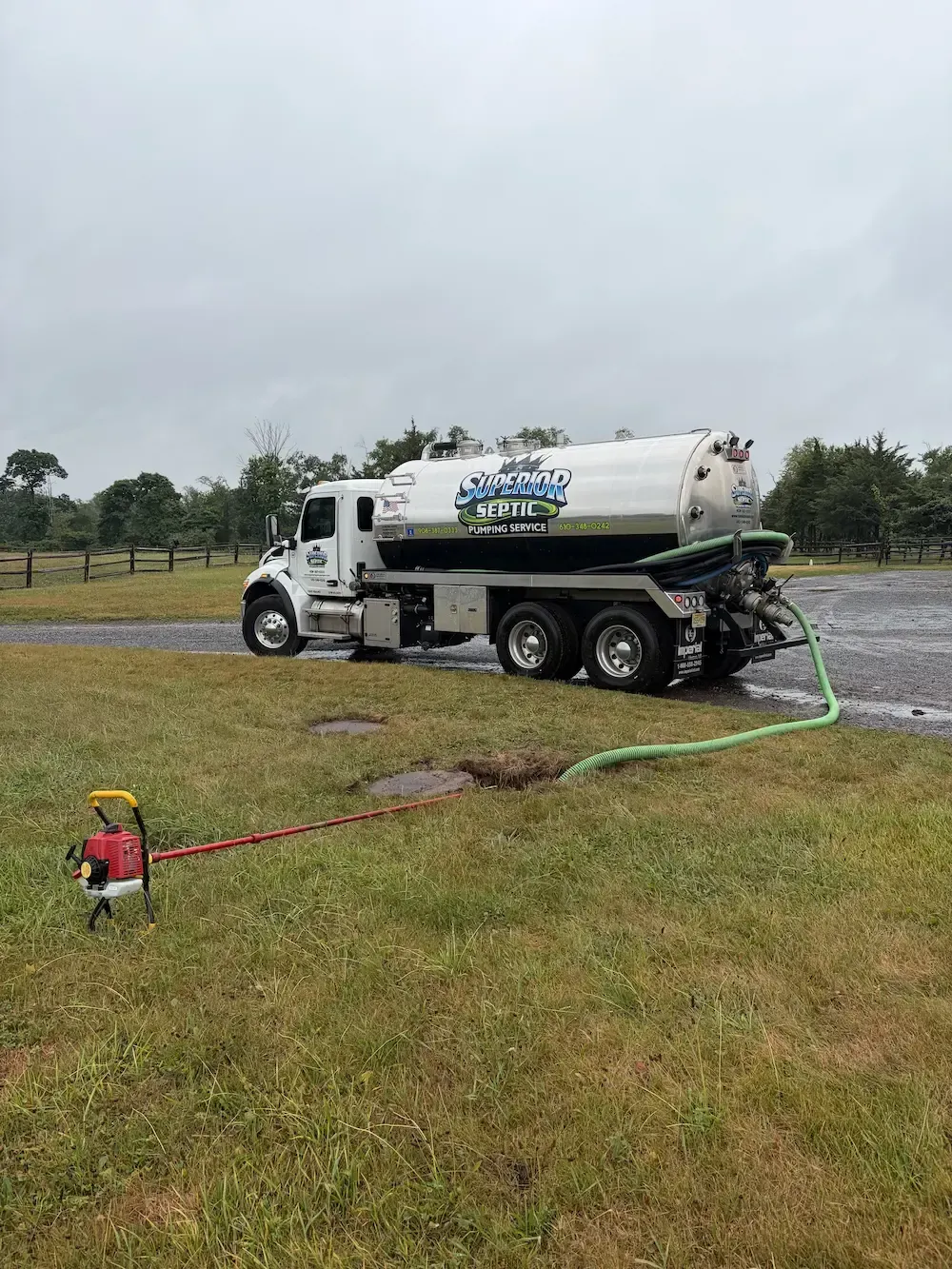
What Is the Difference Between a Septic Backup and a Clogged Sewer Line?
Understanding how wastewater moves through a property makes troubleshooting easier.
In a conventional septic system, wastewater leaves the building through a main sewer pipe and enters the septic tank. Inside the tank, heavier solids settle to the bottom, lighter materials form a floating scum layer, and partially treated liquid exits toward the drainfield.
The drainfield then distributes wastewater into the surrounding soil for further treatment.
A disruption at any point along this route may affect drainage inside the building. However, the location and nature of the disruption determine what type of service is needed.
What Happens When the Main Sewer Line Is Clogged?
The main sewer line carries wastewater away from the building. When that pipe becomes obstructed, wastewater may accumulate behind the blockage instead of reaching the septic tank.
Common causes include grease accumulation, foreign materials, root intrusion, displaced pipe joints, or damaged piping.
A developing obstruction may initially cause intermittent drainage problems. As the opening becomes more restricted, several fixtures can begin draining slowly or backing up simultaneously.
For example, wastewater discharged from a washing machine may appear in a basement floor drain if both fixtures connect to a restricted main line.
In this situation, pumping an otherwise properly functioning septic tank may not resolve the obstruction. The pipe itself may require cleaning, inspection, or repair.
What Happens When the Septic System Cannot Accept Wastewater?
A septic backup may develop when wastewater reaches the tank but cannot move through the downstream components normally.
Possible causes include a blocked outlet tee or effluent filter, a malfunctioning pump in a mechanical system, hydraulic overloading, or an impaired drainfield.
Excessive sludge and scum accumulation may also contribute to system problems by allowing solids to migrate into areas where they do not belong.
When wastewater cannot exit the tank at the intended rate, the liquid level can rise and eventually affect the building sewer.
The important distinction is that the septic tank may not be the only component requiring attention.
A proper diagnosis should determine whether the issue involves the pipe, tank, downstream treatment system, or a combination of problems.
Why Multiple Slow Drains Are an Important Warning Sign
One of the most useful clues during wastewater troubleshooting is determining how many plumbing fixtures are affected.
If a single bathroom sink drains slowly while every other fixture works normally, the restriction may be located in that sink's trap or branch drain.
If toilets, showers, and sinks in different parts of the building begin having problems together, the obstruction may be farther downstream, where those individual drain lines connect.
A main line restriction can affect multiple fixtures because wastewater from several locations depends on the same outlet pipe.
However, multiple slow drains can also develop when a septic system is hydraulically overloaded or wastewater cannot leave the tank properly.
Homeowners should pay attention to patterns rather than individual symptoms alone.
For example, does the downstairs shower begin backing up when the upstairs toilet is flushed? Does the laundry drain cause the kitchen sink to gurgle? Does the problem become worse after heavy household water use?
These observations can provide valuable information when speaking with a septic or sewer service professional.
Five Warning Signs That May Point to a Septic or Sewer Problem
Not every drainage issue requires urgent service, but certain symptoms deserve prompt attention because they can indicate a restriction affecting the building's wastewater system.
1. Toilets Gurgle When Sinks, Showers, or Washing Machines Drain
Gurgling sounds occur when air moves through water inside the plumbing system.
Sometimes this results from a partially blocked drain or main sewer line. In other situations, an improperly functioning plumbing vent may be responsible.
A gurgling toilet is not proof that a septic tank needs pumping.
However, when unusual noises occur alongside slow drainage, sewage odors, or water appearing in other fixtures, further evaluation is appropriate.
2. Wastewater Returns Through the Lowest Plumbing Fixtures
When a main drainage route becomes obstructed, wastewater may emerge through one of the lowest available plumbing connections.
Basement floor drains, first-floor showers, and lower-level toilets can be especially vulnerable.
If wastewater begins returning through these fixtures, stop using plumbing throughout the property.
Continuing to run appliances or flush toilets may introduce more wastewater into an already restricted system, increasing the amount that backs up inside.
Raw sewage should be treated as a health hazard. Keep children and pets away from affected areas and avoid direct contact.
3. Sewage Odors Develop Inside or Outside the Property
Persistent sewage odors can indicate several different conditions.
Inside a building, possible explanations include dry plumbing traps, drain restrictions, venting problems, or wastewater backups.
Outside, odors near the tank or drainfield may be associated with wastewater surfacing, an overloaded treatment area, or problems with system components.
An odor alone does not establish that the septic system is failing. Wind conditions and plumbing vent discharge can also contribute to occasional smells.
However, strong or persistent odors accompanied by slow drainage, wet ground, or sewage surfacing warrant professional attention.
4. Wet Ground Appears Near the Septic Tank or Drainfield
Unexpected pooling, persistently soft soil, or wastewater appearing near the drainfield can indicate that the ground is not accepting effluent as intended.
Heavy rainfall and surface drainage problems can create similar conditions, making it important not to assume every wet area represents septic failure.
The timing of the problem can provide useful context.
For example, moisture that persists during otherwise dry weather deserves more attention than temporary ponding immediately following a significant storm.
A qualified professional may need to investigate the drainage system, wastewater levels, and surrounding site conditions to determine the cause.
The U.S. Environmental Protection Agency's septic system malfunction guidance identifies sewage odors, unusually wet areas, and wastewater backups among the warning signs homeowners should recognize.
5. The Problem Returns Shortly After Pumping or Drain Cleaning
Recurring wastewater problems can be particularly frustrating because a previous service may appear to correct the issue temporarily.
If drains begin working normally after a pump-out but the backup returns soon afterward, the original cause may not have been fully corrected.
A blocked outlet, restricted pipe, malfunctioning mechanical component, or drainfield problem may continue interfering with wastewater movement.
Likewise, clearing an opening through accumulated debris may temporarily restore flow without addressing damaged piping or an ongoing source of obstruction.
Repeated backups should be investigated rather than automatically treated as another routine pumping appointment.
The objective is to identify why wastewater keeps backing up—not simply restore temporary drainage.
Dealing with recurring backups or several slow drains?
Superior Septic provides septic pumping, cleaning, and wastewater troubleshooting for residential and commercial customers throughout Hunterdon County, Warren County, and nearby communities.
How Septic Professionals Determine Where the Problem Is Located
A useful septic or sewer service evaluation begins with understanding the property's symptoms, wastewater system layout, and maintenance history.
The appropriate diagnostic process depends on the type of system and the conditions present.
Evaluating Wastewater Flow From the Building
When multiple fixtures are affected, the building sewer line becomes an important part of the investigation.
A professional may examine accessible cleanouts, consider the location of affected fixtures, and evaluate whether wastewater can move toward the septic tank.
Where appropriate, additional line inspection may help identify a persistent obstruction or damaged section of piping.
The goal is to establish whether wastewater is being restricted before entering the septic tank.
Examining Tank Liquid Levels and Accessible Components
The liquid level inside a conventional septic tank can help indicate how the system is functioning.
A normally operating tank generally contains liquid near its designed operating level. That is not the same as having an excessive accumulation of sludge and scum.
An unusually high level may raise questions about the outlet or downstream components. An unusually low level may suggest leakage or another condition requiring investigation.
A technician may also evaluate accessible baffles, inlet and outlet fittings, and other components for visible signs of restrictions or damage.
The assessment must account for the system's particular design.
Reviewing Pumping History and Solids Accumulation
If the homeowner does not know when the septic tank was last pumped, maintenance history becomes another important consideration.
Routine pumping removes accumulated sludge and scum, helping prevent solids from escaping into downstream treatment components.
However, the need for pumping should not be determined solely by the presence of wastewater inside the tank.
A professional assessment can help establish whether accumulated solids have reached a level requiring removal.
Checking for Drainfield or Downstream Problems
If wastewater can enter the tank but cannot leave the system normally, downstream conditions may need to be investigated.
Depending on the property, this can involve observing drainfield conditions, evaluating distribution components, or assessing mechanical equipment.
Some problems are visible during a basic evaluation; others require specialized inspection or additional professional expertise.
Not every malfunction can be diagnosed or repaired through pumping or drain cleaning alone.
When Septic Tank Pumping Is the Appropriate Service
Septic tank pumping is essential preventative maintenance, but it should not be confused with repairing every wastewater system failure.
Over time, solids accumulate inside the septic tank. If they are not removed at appropriate intervals, the available separation volume decreases, and solids may move toward the outlet.
Routine pumping helps protect downstream components from unnecessary solids accumulation.
According to the EPA's septic system maintenance recommendations, typical residential tanks are pumped every three to five years, although actual frequency depends on household size, tank capacity, wastewater generation, and accumulated solids.
Some systems require more frequent attention, particularly those serving larger households or involving specialized mechanical components.
A pump-out may be warranted when solids have accumulated beyond acceptable maintenance levels or when tank conditions require the removal of accumulated waste.
However, pumping cannot repair a broken sewer pipe, remove every pipe obstruction, or restore an impaired drainfield.
For homeowners looking for professionalseptic tank pumping in Flemington, NJ, Superior Septic provides pumping and related maintenance services throughout Flemington and surrounding Hunterdon County communities.
When Hydro Jetting May Be a Better Solution Than Pumping
Hydro jetting and septic pumping address different parts of a wastewater system.
Septic pumping removes accumulated contents from the tank.
Hydro jetting uses pressurized water to remove certain types of deposits and restrictions from suitable sewer and drain piping.
This can be beneficial when grease, sludge, or other debris accumulates along the inside surfaces of a pipe and restricts wastewater flow.
Unlike methods that primarily create an opening through an obstruction, hydro jetting can help clean broader sections of the pipe interior.
However, the method is not appropriate for every situation.
Pipe material, age, structural condition, and the type of obstruction all influence whether high-pressure cleaning is suitable. Severely deteriorated or collapsed pipes may require repair rather than cleaning.
Hydro jetting should also not be presented as a solution for a failed drainfield.
For properties with repeated clogs, identifying the location and condition of the affected piping is essential before recommending the appropriate cleaning method.
Superior Septic offers hydro jetting and drain-related services for residential and commercial customers in its service area.
Why a Recently Pumped Septic Tank Can Still Back Up
One of the most common misconceptions about septic systems is that a newly pumped tank should eliminate all wastewater problems.
The reality is more complicated.
In a functioning conventional septic system, the tank begins refilling with wastewater as soon as the household resumes normal water use.
Eventually, the liquid returns to the system's designed operating level.
That is normal.
If backups occur shortly after pumping, the homeowner should not assume the tank filled with solids again.
Instead, an unresolved restriction or downstream malfunction may be preventing wastewater from moving through the system properly.
For example, a restricted outlet can prevent liquid from leaving the tank. A blocked building sewer can prevent wastewater from reaching the tank.
A saturated or impaired drainfield can limit how much effluent the system can disperse.
Each condition requires a different response.
When a septic backup returns after pumping, further troubleshooting is generally more useful than repeatedly ordering the same service without identifying the cause.
What Homeowners Should Do During an Active Sewage Backup
Sewage inside a home or commercial building presents potential sanitation and property-damage concerns.
If wastewater is backing up through plumbing fixtures, stop using water as soon as possible. Avoid running laundry, dishwashers, showers, and other fixtures that would send additional wastewater into the affected drainage system.
Keep children and pets away from contaminated areas.
Do not attempt to enter or inspect the interior of a septic tank. Septic tanks and associated confined spaces can contain dangerous gases and other serious hazards.
Avoid using chemical drain cleaners as a substitute for diagnosing a major sewer or septic backup. They may not address the underlying cause and can introduce additional safety concerns.
If sewage contacts floors, walls, furnishings, or other occupied areas, appropriate cleanup and disinfection are necessary. Significant contamination may require qualified remediation personnel.
Contact a septic or sewer service professional and explain which fixtures are affected, when the problem began, and whether sewage is actively entering the building.
For homeowners using private drinking-water wells, sewage-related flooding or suspected contamination may also warrant contacting the appropriate local health authority.
What Information Should You Have Ready When Calling for Septic Service?
You do not need to diagnose the problem before calling Superior Septic. However, a few details can help the service team understand the situation.
Start by identifying which fixtures are affected. Is the problem limited to one sink, or are multiple bathrooms backing up?
Note when the symptoms began and whether they followed heavy rain, significant water use, or recent plumbing work.
If you know the date of the last septic pumping, have that information available. Mention any previous backups, line cleaning, inspections, or repairs.
It also helps to know whether the septic tank access lid is visible or buried.
For property managers and commercial customers, explain whether the issue affects one area of the building or several plumbing fixtures across the facility.
This information helps communicate the seriousness and scope of the problem, although an onsite assessment may still be necessary.
Residential and Commercial Septic Troubleshooting in Hunterdon and Warren County
Wastewater systems vary widely from one property to another.
An older residential property may have a different system layout, maintenance history, or access configuration than a newer home. Commercial facilities can introduce additional demands depending on occupancy, wastewater volume, and the type of activities conducted onsite.
The same visible symptom a slow drain or recurring backup can have different causes depending on the system.
For homeowners and businesses in Phillipsburg, Superior Septic provideslocal septic pumping, inspection, and troubleshooting services.
Property owners can also find information aboutseptic services in Clinton, NJ, andseptic services in Pittstown, NJ.
Superior Septic serves residential and commercial customers across Hunterdon County, Warren County, and nearby Pennsylvania communities.
For restaurants and other commercial properties, wastewater problems may involve grease accumulation or maintenance requirements that differ from residential septic systems.
The most useful solution is one based on the property's actual equipment, wastewater demands, and the cause of the restriction.
Frequently Asked Questions About Septic Backups and Clogged Sewer Lines
Can a Clogged Sewer Line Cause a Septic Backup?
Yes. A blockage in the pipe between a building and its septic tank can prevent wastewater from flowing normally. As wastewater accumulates behind the restriction, it may back up through toilets, showers, or other plumbing fixtures.
How Can I Tell Whether My Septic Tank Needs Pumping or My Sewer Line Is Blocked?
The symptoms alone may not provide a definitive answer. Multiple slow drains, sewage odors, and recurring backups can occur with either problem. A professional evaluation of the sewer line, tank conditions, and wastewater flow helps identify the actual cause.
Will Pumping My Septic Tank Fix a Main Sewer Line Clog?
Not necessarily. Pumping removes accumulated waste from the septic tank, but it does not directly clear an obstruction inside the main sewer line. A blocked or damaged pipe may require cleaning, inspection, or repair.
Why Is My Septic System Backing Up After Heavy Rain?
Heavy rainfall can saturate soil and reduce a drainfield's ability to absorb wastewater. However, sewage backups following rain may have several causes, including drainage problems or other system restrictions. Professional assessment is important.
Can Hydro Jetting Remove Tree Roots From Sewer Pipes?
Hydro jetting may help address certain root-related restrictions in suitable piping. However, roots entering through damaged joints or cracks may return unless the underlying structural problem is corrected.
Does a Full Septic Tank Always Mean It Needs Pumping?
No. Conventional septic tanks normally contain wastewater at a designed operating level. Pumping needs are generally determined by solids accumulation, maintenance history, and system conditions—not simply by whether liquid is visible inside the tank.
Why Are My Drains Still Slow After Septic Pumping?
If drains remain slow after pumping, a restriction may exist in the building sewer, septic inlet or outlet, or downstream components. Further troubleshooting may be needed to identify the problem.
Is a Septic Backup an Emergency?
Sewage backing up into occupied areas requires prompt attention because of potential contamination and property damage. Stop using water and contact a qualified service provider. Response availability should be confirmed when scheduling.
Does Superior Septic Provide Septic and Sewer Services in Flemington and Phillipsburg?
Yes. Superior Septic provides septic pumping, cleaning, inspections, hydro jetting, and related wastewater services for customers in Flemington, Phillipsburg, and surrounding Hunterdon and Warren County communities.
Get Professional Help for Septic Backups and Sewer Line Problems
When wastewater stops draining properly, the most important step is identifying what is preventing the system from functioning as intended.
A main sewer line obstruction, accumulated septic tank solids, damaged piping, and drainfield problems may produce similar symptoms, but they require different approaches.
Choosing the appropriate service begins with understanding the actual cause.
Superior Septic provides residential and commercial septic pumping, cleaning, inspections, hydro jetting, and related wastewater services throughout Hunterdon County, Warren County, and surrounding New Jersey and Pennsylvania communities.
Whether you are experiencing multiple slow drains, recurring sewer backups, or concerns about your septic system, contact Superior Septic to discuss the problem and arrange appropriate service.